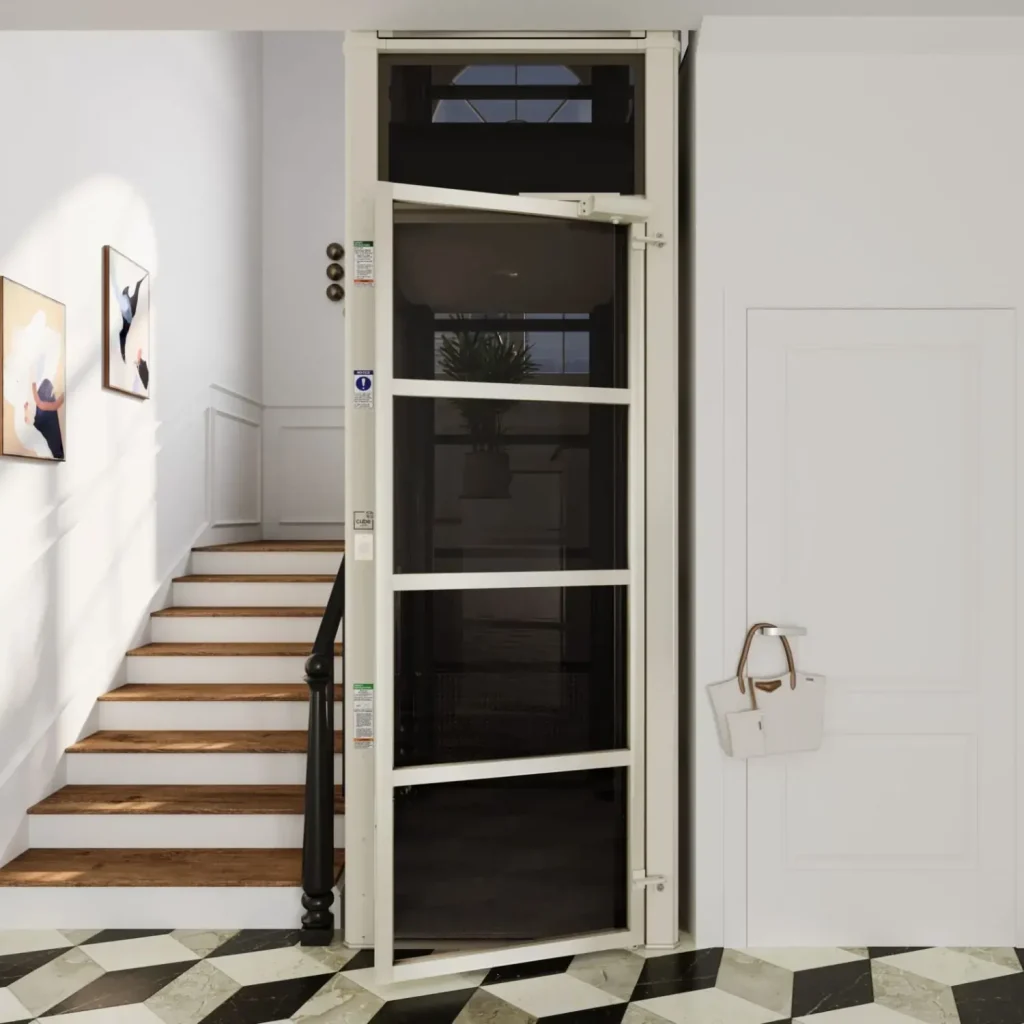

Home Elevator Cost & Buying Guide
Home Elevators in Portland, OR: Cost, Types & How Installation Works
Adding a home elevator is one of the most practical ways to make a multi-story home accessible — and one of the most permanent. All In One Mobility is Portland, Oregon’s licensed home elevator dealer (Oregon CCB #165310), and we handle every part of the process ourselves: sales, permitting, installation, and ongoing service. You won’t need to coordinate a separate contractor, electrician, or inspector.
This guide covers the types of home elevators we install, what typically drives cost, how Oregon’s permit and installation process works, and how to decide whether a home elevator — or a different mobility solution — is the right fit for your home.
Types of Home Elevators We Install
Not every home is built the same way, so we carry three elevator types built around different budgets, layouts, and construction situations.
Hydraulic elevators use a hydraulic piston to move the cab and are built into a dedicated shaftway — a traditional choice for larger homes or new construction, offering a smooth ride and higher weight capacity.
Cable-driven elevators like the Elvoron HR Home Elevator use a counterweighted cable-and-pulley system. They’re typically more energy-efficient than hydraulic models and work well when a shaftway is already framed or being newly built.
Pneumatic vacuum elevators like our Cube Elevator and Pneumatic Vacuum Elevator use air pressure to move a self-supporting cylindrical cab and don’t require a traditional shaftway or separate machine room — a common choice for retrofits into existing homes where space is tight.
See our full lineup: Elvoron HR Home Elevator, Cube Elevator, and Pneumatic Vacuum Elevator.
How Much Does a Home Elevator Cost?
Home elevator pricing varies more than most home improvement projects because so much depends on your home’s structure. The biggest cost drivers are:
- Number of stops — an elevator serving two floors costs less than one serving three or more.
- Shaftway construction — if your home doesn’t already have a shaftway, building one adds to the project (pneumatic vacuum elevators avoid this cost since they’re self-supporting).
- Cab finish — standard finishes cost less than custom wood paneling, glass, or upgraded lighting and flooring.
- New construction vs. retrofit — building an elevator into new construction plans is generally more cost-effective than adding one to an existing home.
Because of that range, we don’t publish a flat price — every quote starts with a free in-home consultation so we can give you an accurate number based on your home, not a generic average. Schedule a free consultation.
The Oregon Permit & Installation Process
Oregon requires a licensed elevator mechanic to install a residential elevator — this isn’t optional, and it’s not a project a general contractor or handyman can pull a permit for. Here’s what the process looks like with us:
- In-home consultation — we assess your home’s layout, structure, and where the elevator will go.
- Design & permitting — we handle the permit application and coordinate with your local building department.
- Installation — our licensed technicians install the elevator, including any shaftway or structural work required.
- Inspection & sign-off — the completed installation is inspected before it’s cleared for use.
- Ongoing service — we provide continued maintenance and service after installation.
Because we manage permitting and installation in-house, you’re not responsible for coordinating separate contractors, electricians, or inspectors.
Is a Home Elevator Right for You?
A home elevator isn’t the only way to move safely between floors. If you’re weighing your options:
- A stair lift is typically faster to install and lower-cost, and works well if you can still use stairs with assistance and just need help with mobility. See our Stair Lifts guide.
- A platform (wheelchair) lift is worth considering if you use a wheelchair and need a lift you can board without transferring seats. See our Platform Lift category.
- A home elevator makes the most sense if you want a permanent, whole-home accessibility solution — especially in a multi-story home you plan to stay in long-term.
Our Home Elevator Products
Home Elevator Category • Elvoron HR Home Elevator • Cube Elevator • Pneumatic Vacuum Elevator
Home Elevator FAQs
Medicare typically does not cover home elevators, since they’re classified as a home modification rather than durable medical equipment. Some VA benefits and long-term care insurance policies may help offset the cost — see our full FAQ page for more on coverage options.
Yes. Oregon requires a permit and a licensed elevator mechanic for installation — we handle this as part of every project.
It depends on the type. Pneumatic vacuum elevators need the smallest footprint since they don’t require a shaftway; hydraulic and cable-driven elevators need a dedicated shaftway sized to the cab. We’ll confirm exact dimensions during your in-home consultation.
Timeline depends on whether a shaftway needs to be built and on permitting turnaround with your local building department. We’ll give you a project-specific timeline after your consultation.
Ready to Get Started?
Find out what a home elevator would look like — and cost — in your home. Call (503) 255-5005 or request a free in-home consultation. We serve Portland, Beaverton, Hillsboro, Gresham, Lake Oswego, and Tigard.
Get in touch
We’re here to listen, assist, and guide you; connect with us today and let’s make mobility a seamless experience together.
12833 NE Airport Way, Portland, OR 97230
sales@allinonemobility.com
Phone : 503-255-5005
Toll Free: 800-944-4935